
PPF vsCeramic Coating.
Two different kinds of protection, often confused with each other. Here is what each one actually does, and how we combine them on a vehicle in San Jose, California.
One Blocks Impact.
One Adds Gloss.
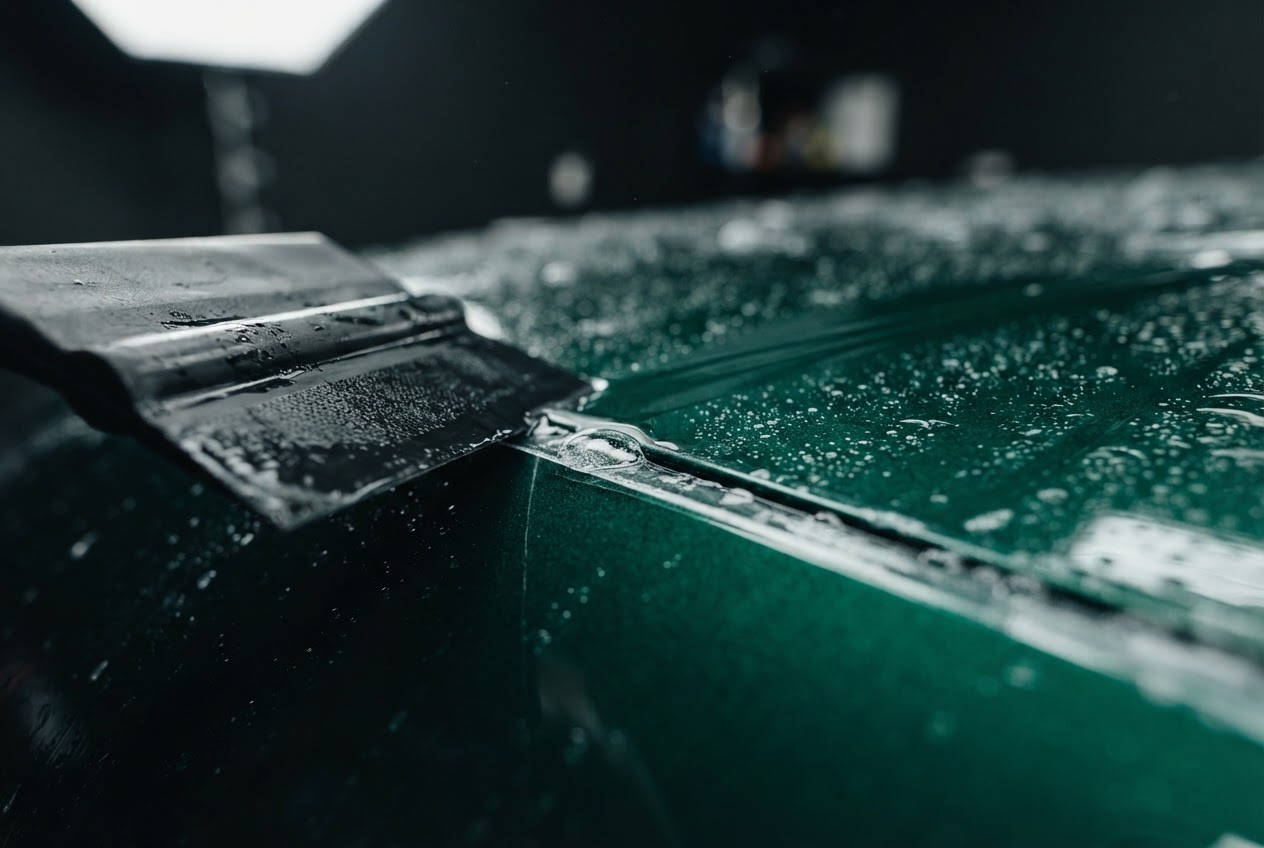
Paint protection film is a physical layer. It is a clear urethane applied over the painted panels of a car to absorb the energy of a rock chip, a shopping cart, or road debris. Because the damage stops in the film instead of the paint, film is the only product that prevents permanent paint damage. It is also self-healing: light scratches and wash marks disappear when the film is warmed by the sun or by hot water.
A ceramic coating is a chemical layer. It is a liquid polymer applied by hand that bonds to the clear coat and cures into a hard, glass-like surface. It does not absorb impact, but it adds gloss, resists UV fading, water spotting and chemical etching, and makes the car far easier to wash because water and dirt release from a hydrophobic surface. Coatings are measured in years of durability, not in mils of thickness.
So the honest answer to "which one is better" is that they are not competitors. Film protects the paint from damage; a coating protects the surface from contamination and makes it easier to maintain. On a daily-driven performance car, the two are installed together: film on the impact panels, coating over the entire vehicle including the film itself. Window tint is the third, independent layer, and it solves an interior problem rather than a paint problem.
Three Layers.Three Jobs.
Paint Protection Film
A clear, self-healing urethane film applied over painted panels. It is the only product that absorbs physical impact, which is why it is installed on hoods, bumpers, mirrors and fenders where rock chips and road debris land.
Learn moreCeramic Coating
A liquid polymer that chemically bonds to the clear coat and cures into a glass-like layer. It adds gloss, UV and chemical resistance, and a hydrophobic surface that makes washing dramatically easier, but it cannot stop a stone.
Learn moreWindow Tint
Nano-ceramic film on glass that rejects infrared heat and blocks UV without darkening the cabin beyond legal limits. It protects occupants and interior surfaces, and it is a separate decision from paint protection.
Learn moreCorrection.Film.Coating.
The sequence matters more than the products. Every project starts with decontamination and machine paint correction, because film and coatings seal in whatever is underneath them. Film is installed next on the panels that take impact, cut to the body lines and finished with edges tucked behind panels so seams are not visible. Once the film has cured, the coating goes on last over the paint and the film together, so the whole car sheds water and cleans the same way.
Which One Do You Need?
- Highway miles, canyon drives or track days: film on the front end first, because impact damage is permanent and cannot be polished out.
- A new or freshly corrected car you want to keep glossy: correction, then film, then a coating over both.
- Interior heat, glare or sun damage: ceramic window tint, scheduled in the same visit.
- Older paint with swirls and water spots: paint correction before any protection, since film and coatings lock in whatever sits beneath them.
Owners who plan to keep a car long-term usually do all three, staged across one visit. Owners leasing a car, or driving something whose paint is already imperfect, get the most value from tint and detailing first. A consultation at the studio settles the order for your specific vehicle, budget and how the car is actually driven.
Common Questions
They protect against different things. Film absorbs physical impact from rock chips and road debris, while a coating adds gloss and chemical resistance but cannot stop an impact. If the car sees highway miles, film on the front end saves paint that a coating cannot.
Yes. Film is installed first and allowed to cure, then the coating goes over it so the film itself becomes hydrophobic and easier to clean. This combination is the most protective setup for a daily-driven performance car.
A professionally installed self-healing film carries a multi-year manufacturer warranty. Coatings are rated in years depending on the package chosen, and quality ceramic tint film is built to last many years in the sun without turning purple or bubbling.
Ceramic tint rejects infrared heat rather than simply darkening the glass. A quality nano-ceramic film cuts a large share of the heat entering through the glass while staying within legal visible light transmission for California windows.
Paint work comes first: decontamination, paint correction, then film, then coating over both. Tint is independent of the paint and is usually scheduled during the same visit so the car is only in the studio once.
Tell Us HowYou Drive.
Tell us about your vehicle and what you envision. Every project begins with a one-on-one consultation and a transparent, itemized quote — no surprises, just precision.